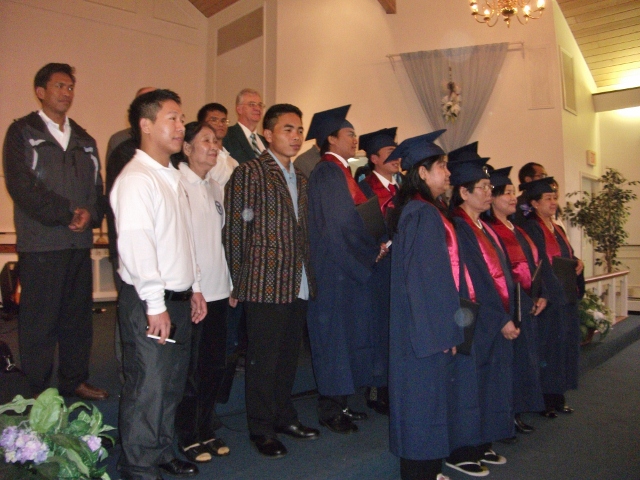
The annual service of ordination for new ministers is one of the highlights of the church year. This year it had a decidedly international texture. Seven people were ordained; five men and two women. One of them was pastor Par Thoo, who just graduated from Burmese Bible school and has been pastoring at Utica Karen Wesleyan Church. He was wearing a bright blue plaid Karen coat. A Karen soloist named Snowbell sang in English and then partnered with a Karen tenor as lead singers with the Karen choir. Parts of the service were interpreted by Saw Kler for the members of the Karen congregation. General Superintendent JoAnne Lyon illustrated her message with powerful anecdotes from her mission travels in Africa and Asia. And after the ordinations were completed she gave each ordinand a handmade cross purchased in Sierra Leone, South Africa or Colombia. JoAnne and I, Pastor Eric and Magda, Ben Mackey and Kim attended. Nancy Zecher, Marilyn Wilsch, Brenda VanDuser, Cindy Center and her granddaughter came too because Roberta Davis of our district’s Wesleyan Women ministry was also among those ordained. The service was hosted by one of our district’s largest churches, Crosswinds Wesleyan in Canandaigua.
Category: Church Leadership
Encouragement for leaders
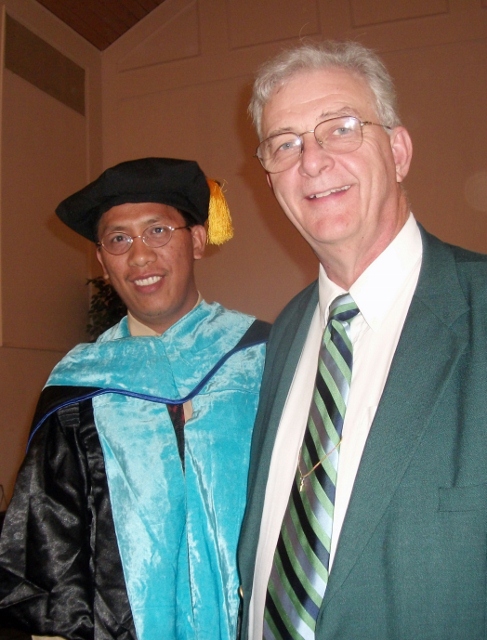
What a joy for JoAnne and I to attend Burmese Bible School (BBS) graduation on Saturday, Oct. 1. The school has been organized to meet the need for pastors to serve the burgeoning population of Burmese speaking immigrants. Many of these immigrants are Christians as they come from ethnic groups influenced by the tremendous pioneering missionary ministry of Adoniram Judson. Both Pastor Eric and I have occasionally taught at the school along with many other pastors from our district. It is taught in Burmese so we teach through a translator. I have taught courses in church leadership and in homiletics. Pastor Eric has taught theology. One of the greatest joys was to see the three Burmese churches of our district all gathered to celebrate with the graduates. Youth choirs from the mainly Chin congregation at Midler Avenue and from the chiefly Karen congregation at Utica and from the Burmese group at Lyncourt all sang as did the BBS choir. I was impressed with the thought as I saw all the Burmese faces: I am helping to train shepherds for all these. It is a big privilege and also a weighty responsibility.

When I was a young pastor, I didn’t understand the importance of celebration. I guess I must have ignored the fact that the OT has a regular schedule of feasts for the Israelites to be involved in. Maybe it came from the the everyday nature of dairy farming where I grew up. Maybe it was because celebration in our culture often has an unhealthy and unnecessary association with drinking alcohol. But over the years, I have discovered the importance of the Bible’s example of taking time to celebrate in wholesome ways.
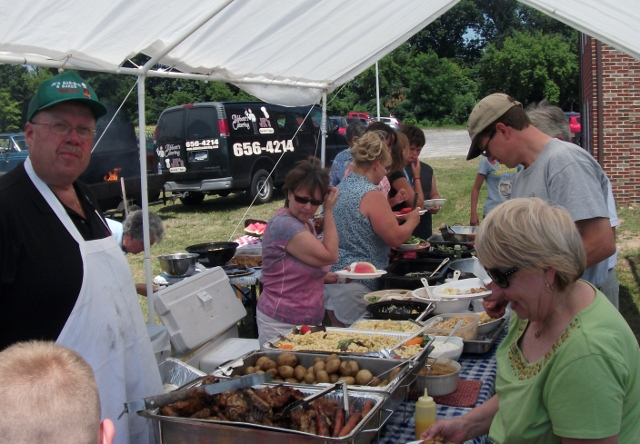
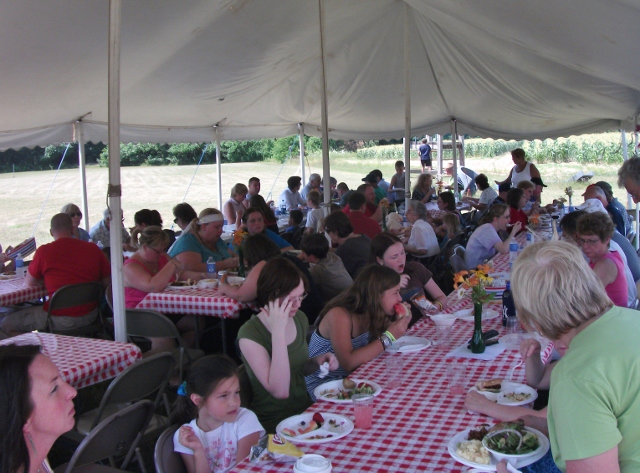
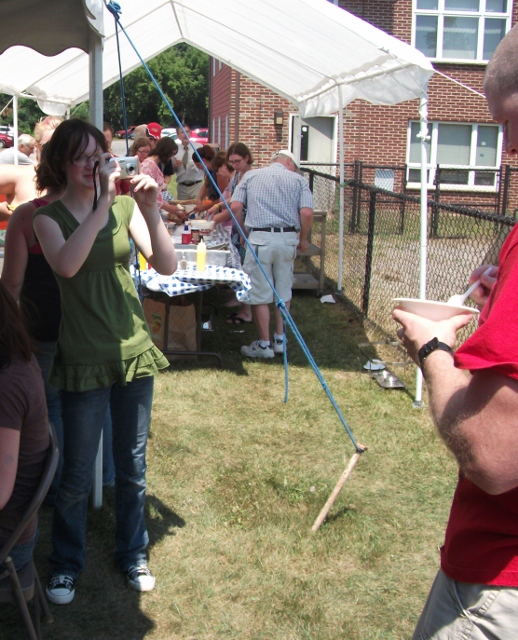
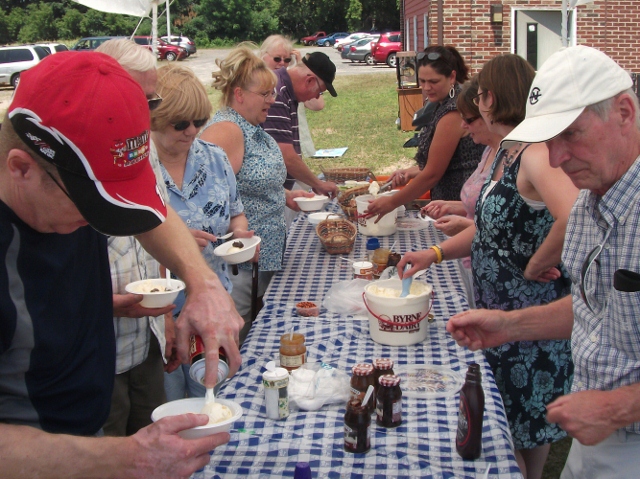
So, for example, this last weekend at Community Wesleyan, we took time to celebrate. It was the Celebration Sunday of our 50th Anniversary Makeover Campaign. So we took time out to celebrate. We put up the tents outside, had chicken barbeque and brought in the watermelon and ice cream. It was a great picnic and it lent a air of festivity to our event that it would not otherwise have had. Everyone enjoyed themselves.

Write in your Bible
I am always encouraging people to personalize their own Bibles by marking verses that have special meaning for them. Most people who do this soon want to categorize their marking by using some kind of color system. Many people also want to use a marking system that does not obscure the words as one often accidentally does when using ink. The method must also not bleed through. Several years ago I happened to try something very simple but also very effective–children’s colored pencils. They have fatter colored “leads” than normal colored pencils. They act like a highlighter but do not bleed through like a highlighter will. Because they are thicker, many fewer strokes are required and there is no danger of torn pages as with sharp smaller ones.
The only problem is that they are seldom available. I have literally looked for years for a second set to have at home. Well, this week I found one. They are currently available again. I found mine at Staples.
A simple colored pencil system
I highly recommend a simple color scheme using colored pencils to mark your Bible. I use orange for promises and special verses. If I can’t figure out what color to use, it gets orange. Blue is for salvation; verses related to what Jesus has done for us and what gifts God has given us through his Son. Yellow is for verses of praise to God; verses that adore Jesus Christ. Green is for spiritual growth. Red is for stewardship verses that encourage me to use what I have well. Purple is for verses about heaven. That’s about it. I keep it simple.
What a joy it was to lead the special church conference this evening in the consideration of the 50th Anniversary Project. I had felt that there was a positive feeling about the various parts of the project but one always wonders if everyone is speaking up. There was good attendance at our meeting. This was gratifying since I had postponed it due to weather one time. But sometimes good attendance means sharp division of opinion. In this case, however, it quickly became obvious that good attendance signaled a strong excitement and a unanimous enthusiasm for the project.
I’ve written a new essay explaining a fundamental change in thinking that is needed in smaller churches if they are to successsfully fulfill the great commission in the area of service to which God has assigned them. I am excited to share this insight. It is really a distillation of things I have learned over the years. I hope it is helpful.
Because it was a docx document containing smart art, diagrams and tables, I have saved it as a pdf and am experimenting with a new way of embedding it here.
While they were worshiping the Lord and fasting, the Holy Spirit said, “Set apart for me Barnabas and Saul for the work to which I have called them.” So after they had fasted and prayed, they placed their hands on them and sent them off” (Acts 13:2-3 NIV).
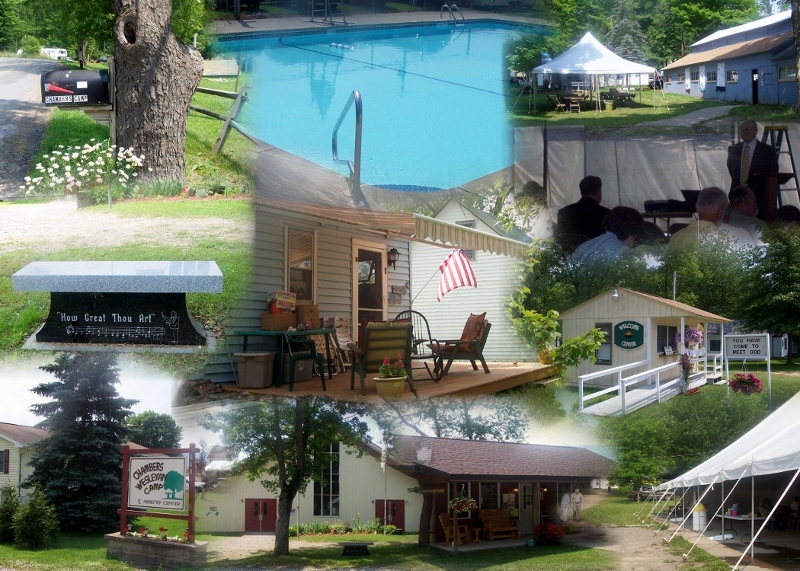
What exciting news to learn that Peter Moon, one of our members, has been tapped as the new Camp Manager for Chambers Wesleyan Camp and Conference Center. Peter will be responsible for maintenance and promotion of the camp and will play a role in planning as well. Peter is taking a big cut in pay but believes that it is more than made up for by the tremendous incentive of working full-time for a higher purpose. He feels called to this ministry. The family will be relocating to Chambers very soon.
Of course, this causes a tinge of sadness for us as we will miss seeing the Moon’s as often, enjoying their laughter and friendship, and we will miss their many and varied contributions to the ministry here as well. But in another sense, we can think of it as an honor when God chooses those from our church family to press into service in his wider vineyard. It means the Lord of the Harvest has trusted us to disciple, encourage and prepare servants for his work, just as he used the church at Antioch to prepare Barnabas and Saul. That is an affirmation to the ministry of our church. Now it is up to us to take the next step too, which we began to do this past Sunday; that step is to pray for them, and send them off with blessing even as the church of Antioch did.
Categories
Building up people power
As I move through the senior years of my ministry, I find I am blessed and my ministry is truly enabled by remembering and putting into practice a basic principle of leadership; the networking of people resources.
1. Accept ideas:
Letter writer, David C. Ashley, in today’s Post Standard opinion page decried a lack of obvious clergy leadership in changing the climate of political discourse in our country. I have good news for him. Just such a leadership move has been in the works for awhile and at this crucial time has just begun to be publicized http://www.christianpost.com/article/20100326/conservative-liberal-christians-vow-to-model-civility/.
This initiative is authored and signed by many prominent clergy of various denominational backgrounds. It is called A Covenant for Civility: Come Let Us Reason Together. It is inspiring to read and is very Biblically based. If implemented, it would bring the Golden Rule back to American politics, something we haven’t seen since politicians discovered that slander via advertising works in election campaigns. I have personally joined those signing this important document and encourage others to do so. I found a signable copy and list of many of the chief signers at http://www.sojo.net/index.cfm?action=action.display&item=100308-civility-covenant. I intend to honor it (I hope I already have been) as I blog and as I preach.
I have been reflecting recently about how some key changes in our culture have affected pastoral work over the 30 years. Particularly, I have been documenting lately the decreasing number of natural connection points for a pastor with the families in the community surrounding the church. Many different cultural trends have joined together to have one giant cumulative effect.
When I first started as a parish minister, there were three sources of contact with folks living around the church that were very reliable, that is these dynamics consistently connected me as a the pastor with people I would otherwise not have had communication with.
1. The most frequent dynamic was hospital visitation. Whenever a friend or neighbor was in the hospital, someone in the extended family would usually request that the pastor visit the sick one. Since hospital stays were then several days long, often this grew into several contacts with the family of the sick person as well, since I would meet them at the bedside in the hospital. Now hospital stays are comparatively rare as even major surgeries are performed as day surgeries at in/out facilities away from the central hospital. If the person is from our church and I find out ahead, I frequently pray with them on the phone ahead.
2. Secondly, there were many weddings that I performed for people in the community. Between required pre-marital discussions, rehearsals, and conversations at the reception, I would meet many people in the community. Now, many fewer people get married, opting to live together instead. Of those, that do marry, some use destination weddings which are often performed by a cooperating minister there. Also, it is more popular to ask family members to perform the ceremony. The overall result is that the local pastor meets many fewer people through wedding ministry than before.
3. The third avenue for connecting with the community was by officiating at funerals. When I first became a pastor, I performed many funerals for people I did not know and for whom I did not even know someone in the family. Then I was new in the community and if the family had never attended the church, often their request to the funeral director would be the only inkling I would have that they felt any connection to our church. In those days, also, nearly everyone had a minister of some kind officiate at their burial. Now many are buried without services, a trend that I find very unhealthy for the grieving process. Because of cremations, there are fewer burials too. Again, the by-product is less contact with the community for the pastor.
It is no wonder that many pastors and parishes are feeling more isolated and insulated from their communities. The conclusion is that I as pastor and we as churches have to be very intentional about replacing these contacts with new avenues of connection. What are they? How effective are they? Who do they reach?